How Solar Panels Work: The Ultimate Guide for Australian Homes
You’re not the only one who saw a surface full of brilliant solar panels and thought, “How solar panels work?” Every year, thousands of Australians move to solar electricity. Knowing how it works will help you make a smart and secure choice. This tutorial breaks out the whole process, how sunlight hitting the solar panel to supplying power to your home, so you really know what happens on your roof.
We at The Solar King believe that information is power. And the more you know about solar, the better decisions you can make for your house, your money, and the environment.
Get a Free Solar Quotes
What Solar Panels Are Made Of and How They Function
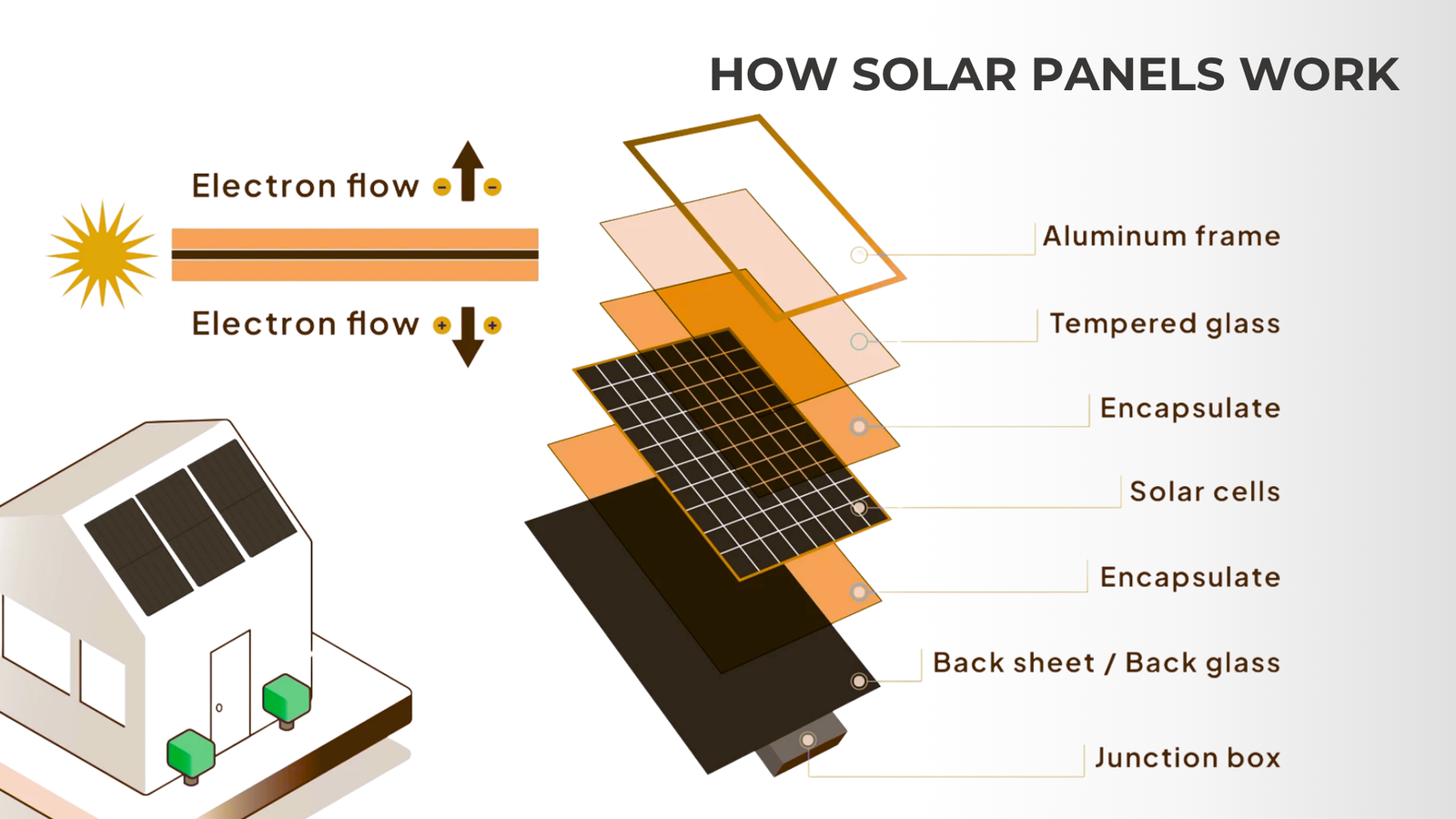
It’s important that you know what solar panels are built of before you can understand how solar panels work. Solar panels, which are also called photovoltaic (PV) panels, are made of silicon cells, a glass layer, an aluminum frame, an outer sheet for protection, and wiring. These cells are made to soak up sunlight and turn it into direct current (DC) electricity.
You can think of each solar cell as a small power plant. When you join thousands of these cells together in a solar panel, you create a powerful system that can make clean, sustainable electricity.
The Full Process of How Solar Panels Work on Your Home
This is a simple explanation of how solar panels work:
1. Sunlight Hits the Solar Panels (Photovoltaic Effect Begins)
When sunlight hits your roof, the solar cells activate. These cells have two layers of silicon: one positively charged and one negatively charged. When photons (light particles) hit these layers, electrons break free and begin traveling. This movement causes the flow of electricity.
This natural reaction is known as the photovoltaic effect, and it is the basis for how solar panels work.
2. The Solar Panels Produce DC Electricity
The electrons that move easily make direct current (DC) power. This is valuable for energy, however your big home appliances don’t work with DC. Instead, they need alternating current (AC).
This is where the inverter comes in.
3. The Inverter Converts DC into AC (Usable Power)
Your solar inverter, which is usually attached to a wall or built into the panel system, works like a translator for your system. It changes the DC electricity into AC electricity, which your home can use right away.
Inverters that are of high grade give improved output and efficiency. We only deal with trusted brands at The Solar King to make sure that our products last as long as possible and work as well as possible.
4. Electricity Powers Your Home First
Here’s the crucial part: your home always uses solar energy first.
When the AC electricity is ready, your lights, refrigerator, air conditioner, televisions, fans, and appliances will begin to run on solar energy. This minimizes the amount of electricity you use from the grid, lowering your power cost.
This self-consumption approach is a fundamental benefit of solar and one of the reasons why Australian homeowners save thousands of dollars each year.
5. Extra Power Goes to the Grid or Battery
If your panels generate more energy than your home needs:
- It flows back to the grid and you earn feed-in tariffs from your energy retailer.
- Or, if you have a solar battery, it charges the battery first. The stored power is used later at night, during cloudy weather, or power outages.
This flexibility is a major reason why homeowners ask how solar panels work before choosing the right system.
How Solar Batteries Improve Your Solar Energy Flow
Many Australians now pair their solar panels with a battery. Here’s how the combination works:
- Solar panels generate electricity
- Your home uses what it needs
- Excess energy charges the battery
- You use the stored power when the sun goes down
Solar batteries offer:
- Energy independence
- Night-time savings
- Backup during outages
- Higher self-consumption
For homes with high evening usage, this is an excellent upgrade.
How Solar Panels Work in Different Weather Conditions
Many homeowners wonder if clouds or hot weather affect how solar panels work. Here’s the truth:
Sunny Days
Maximum efficiency and highest output.
Cloudy Days
Solar still works—just at a reduced rate (20–40% depending on cloud density).
Rainy Days
Solar panels still generate some power, and rain helps wash dust off the surface.
Hot Days
Solar panels perform best in cooler temperatures. Excessive heat slightly reduces efficiency, but Australian-designed panels compensate with robust materials and smart engineering.
Why Understanding How Solar Panels Work Matters
Knowing how solar panels work helps you:
- Choose the right system size
- Understand your savings
- Know when to add a battery
- Maintain your system efficiently
- Ensure you get maximum return on investment
Solar is not just about panels—it’s a complete energy system that transforms sunlight into long-term financial and environmental benefits.
Why Choose The Solar King for Your Solar Installation?
At The Solar King, we specialise in providing high-quality solar solutions for homeowners across Australia. Here’s what sets us apart:
In-House Installation Team
No subcontractors. Only trained professionals installing your system.
Premium Products at Competitive Prices
We source panels and batteries from trusted global brands to ensure durability and efficiency.
Honest Recommendations
We explain how solar panels work clearly and suggest systems based on your actual energy usage—not guesswork.
Seamless Service
From inspection to installation, we handle everything to give you a stress-free experience.
Government Rebate Assistance
We help you claim STCs and other rebates to save thousands upfront.
Choosing the right solar company is as important as the system itself. With The Solar King, you get a partner committed to quality, honesty, and long-term performance.
How to Maintain Solar Panels for Best Performance
Understanding how solar panels work also means knowing how to keep them running efficiently.
1. Keep Panels Clean
Dust, leaves, and bird droppings can reduce output.
2. Check Your Inverter
A red light may indicate a problem—report it immediately.
3. Annual Inspection
Professional servicing ensures maximum output and safety.
4. Monitor Your Energy App
Smart inverters help you track performance in real time.
When you take care of your system, it takes care of your savings.
Frequently Asked Questions
1. Do solar panels work at night?
No, solar panels don’t generate electricity at night. But homes with batteries can use stored energy.
2. How long do solar panels last?
Most panels last 25–30 years with proper care.
3. How much can I save with solar?
Savings depend on system size, usage, and location, but most Australian homeowners save $1,000–$2,500 yearly.
4. Does heat affect how solar panels work?
Yes, extreme heat can reduce efficiency slightly—but high-quality panels are designed to perform well in Australian conditions.
5. Why choose The Solar King?
Because we offer expert installations, premium products, competitive pricing, and clear guidance on how solar panels work so homeowners get maximum results.
Final Thoughts
Knowing how solar panels work will help you see how much value solar adds to your property. Solar power is a long-term investment in your comfort and future because it makes clean energy and lowers your bills.
The Solar King is here to help you every step of the way if you’re ready to install high-quality solar panels or want personalized advise.