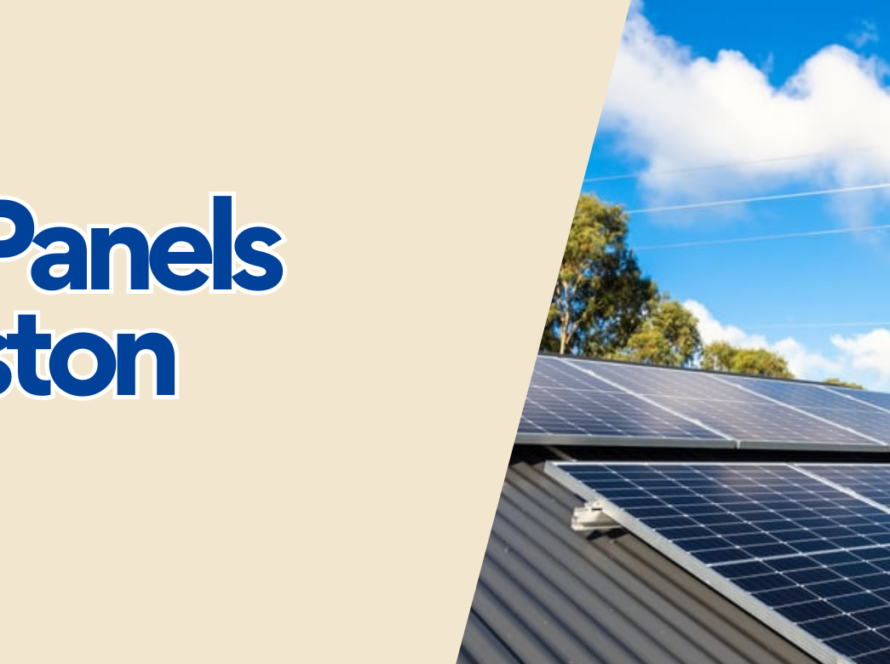

The Solar Victoria rebate provides eligible Victorian households with an upfront reduction of up to $1,400 on the cost of installing solar panels, as well as the possibility of an extra $1,400 interest-free loan. This programme, offered under the Solar Homes Programme, considerably reduces your initial setup expenses. While the state-specific solar battery loan has been ended, homeowners may now take advantage of the new federal government solar battery rebate, which offers significant point-of-sale savings depending on battery capacity. Victorians may achieve total grid independence by combining these state incentives with federal STC reductions to significantly lower their energy expenses.
Get Quote
Understanding the government's solar rebate in Victoria
Victoria leads the country in supporting the switch to renewable energy. If you want to reduce your power costs and protect your home from increasing grid rates, the first and most important step is to navigate the current government rebate solar programmes.
At The Solar King, we often meet with homeowners who are confused by fluctuating laws, closed loan programmes, and eligibility changes. In 2026, the solar rebate scenario in Victoria will provide many layers of financial assistance based on the kind of system you install.
Here is a brief overview of what is presently available:
- Solar Panel Rebate: Get up to $1,400 in point-of-sale discounts.
- Interest-Free Loan: An optional $1,400 loan repayable over four years to match your panel rebate.
- Solar Hot Water Rebate: Up to $1,000 for basic heat pumps and $1,400 for locally built systems.
- Federal Solar Battery Rebate: Significant per-kWh savings under the Small-scale Renewable Energy Scheme (replacing the closed Victorian state battery loan).
Important 2026 Update: As of July 1, 2026, the combined family income qualifying ceiling for the Solar Homes Programme has been reduced from $210,000 to $150,000 per year. This implies that if you fall into this new category, you must move quickly with an official vendor, such as The Solar King.
Solar Panel Rebate
The Solar Homes Program’s primary incentive is the solar panel rebate. It is intended to reduce the financial barrier to switching to rooftop solar by offering an instant, point-of-sale discount on your bill.
How the $2,800 incentive works
Rather of paying full price and waiting months for a tax return or government check, your licensed installation will subtract the solar rebate right from your quotation.
- The Base Rebate: The Victorian Government will reimburse the cost of your system, with a maximum of $1,400.
- The Interest-Free Loan: To help with initial expenditures, you may apply for an interest-free loan that matches a refund amount (up to $1,400). This loan is repaid over four years by direct debit, which works out to a very modest $29.17 each month—an sum that is generally readily compensated by the instant savings on your power bill.
The Solar Battery Rebate Victoria: What Are Your Options in 2026?
A frequently asked topic at The Solar King is, “How much is the solar battery rebate in Victoria right now?”
The solution needs a knowledge of the move from state to federal assistance. Previously, Solar Victoria provided an interest-free solar battery loan. The state-level battery loan programme is now officially ended. However, this does not mean you have to pay the full retail price for energy storage.
The Federal Government’s Solar Battery Rebate
Victorian homeowners may now take advantage of the federal solar battery rebate, which is being implemented as part of the Small-scale Technology Certificate framework for household batteries.
When you install a qualifying home battery in 2026, you will create certificates depending on the battery’s useful capacity.
- The Value: By 2026, this equates to an upfront savings of $300 to $336 per kWh of useable battery capacity.
- What this means to you: If you install a conventional 10kWh battery system, you may expect to get a solar battery rebate of $3,000 or more that will be credited immediately to your installation costs.
Because this is a nationwide campaign, these solar battery discounts combine nicely with your state’s solar panel incentives. You have the best of both worlds.
Hot Water Rebate: Cut Costs on Heat Pumps & Solar Hot Water
Heating water accounts for 15% to 30% of an average Victorian household’s energy use. The state administration is aggressively encouraging residents to stop using outdated gas networks in favour of more efficient electric heat pumps and solar-powered water heaters.
The solar hot water heat pump rebate provides:
Up to $1,000 off the purchase price of a qualifying heat pump or solar hot water system.
Up to $1,400 if you carefully choose a qualifying locally manufactured hot water product to support Victorian manufacturing.
Special Benefit: If you are a Sunset Energy customer affected by the closing of their compressed natural gas network, you are completely excluded from the rebate’s $150,000 income qualifying maximum!
Eligibility Criteria: Do You Qualify for Govt Rebates for Solar Power?
The conditions for getting the solar victoria rebate are closely enforced to guarantee that funds is allocated to qualified homes. To be eligible for the state panel or hot water heat pump rebates, you must fulfil the following requirements:
- Property Ownership: You must be the owner-occupier of an existing or under-construction house. (Landlords may also apply under the Solar for Rentals programme for up to two properties each financial year).
- Income Limit: As of July 1, 2026, the combined household taxable income of all property owners must be less than $150,000 per year.
- Property Value: The house must be valued at less than $3 million.
- Prior Claims: The property address must not have had a solar panel system installed in the last 10 years, and you cannot have previously earned a solar panel or battery refunds via the Solar Homes Programme.
Regulatory and Local Grid Requirements
Your eligibility is also dependent on technological compliance. Your system must be installed by a Solar Accreditation Australia (SAA)-accredited professional, and the hardware must be on the Clean Energy Council (CEC) approved list.
Furthermore, before we begin installation, we get pre-approval from your local Distributed Network Service Provider (DNSP), which may be Powercor, CitiPower, Jemena, AusNet, or United Energy. This guarantees that your local grid can safely manage your solar exports and sets your feed-in rates.
How to Apply for Your Government Solar Rebate (Step-by-Step)
Browsing government websites may be stressful. Here’s how we guarantee our clients get their bonuses without the hassle:
- System Design and Quote: We evaluate your roof, energy costs, and local DNSP criteria to create a customised system. We will then send an official quotation from an approved store.
- Portal Upload: The Solar King posts this remark immediately on the Solar Victoria site.
- Eligibility Verification: Solar Victoria will send you an email. You’ll need to submit two pieces of identification (such as an Australian driver’s licence or a Medicare card) as well as evidence of income (such as an ATO Notice of Assessment).
- The QR Code: Solar Victoria will send a unique QR code after your application has been accepted. On the day of installation, our authorised installers must scan this code on-site before beginning any work—a necessary safety and compliance check.
- Installation and Point of Sale Discount: The complete rebate amount is subtracted straight from your final invoice. You just pay the outstanding amount.
Taking Advantage of Your Savings: Combining Federal and State Schemes
Many homeowners are unaware that the government’s solar rebate scheme includes two distinct financing sources.
While the Solar Victoria rebate offers up to $2,800 in state support (rebate plus loan), any qualifying system installed in Australia is also eligible for the federal STC programme.
Depending on your STC Zone in Victoria and the size of your system, these certificates provide an extra, automatic reduction. For a typical 6.6kW system, the STC rebate may easily save another $1,500 to $2,500 off the retail price.
When you include the state solar panel rebate, the federal STC discount, and the new federal solar battery rebate, 2026 remains one of the most financially favourable periods in history to make your house energy independent.
Frequently Asked Questions (FAQs)
While the state-run Solar Victoria battery loan is no longer taking applications, Victorian residents may take advantage of the federal solar battery refund. In 2026, this delivers an upfront reduction of around $300 to $336 per kWh, saving over $3,000 on a normal 10kWh house battery.
Yes! If you match the qualifying requirements (including the $150,000 income limit), you may get both the solar panel refund (up to $1,400) and the hot water rebate (up to $1,000, or $1,400 for locally manufactured systems) on the same property.
If your combined family taxable income exceeds the $150,000 threshold set in July 2026, you will no longer be eligible for the state-level Solar Victoria panel or hot water rebates. However, you are completely eligible for the federal STC programme and federal solar battery incentives, which do not presently have income testing requirements.
The basic refund (up to $1,400) is a direct gift that does not need repayment. However, if you choose the matching interest-free loan (up to an extra $1,400), you must return the loan amount in four years by monthly direct debits.
Yes. Under the Solar for Rentals programme, qualifying landlords may get a refund of up to $1,400 for installing solar panels on up to two rental properties per financial year. This allows landlords to increase property value while dramatically lowering their renters’ energy expenditures.
Navigating the precise quantities, DNSP pre-approvals, and application websites may be challenging. Contact the specialists at The Solar King now. We’ll examine your property, determine your specific state and federal savings, and assist you in locking in your 2026 solar victoria rebate before policy limitations change again.
External references for more reading: